Loading...
First Round of Abstract Submission Ends: Jan 30, 2026
Extended Early Bird Ends: Jul 28, 2025

Keynote Speakers

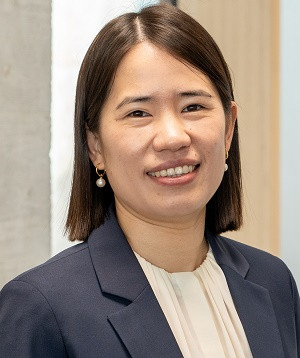
Prof. Shengchuan Wu
Southwest Jiaotong University, China
Title: Multi-modal experimental characterization on internal damage of critical-safety AM components
Shengchuan Wu is Professor of State Key Laboratory of Rail Transit Vehicle System, Southwest Jiaotong University, China. He received both his B. Eng. and M. Eng. Degrees from Huazhong University of Science and Technology. His research interests include in situ correlative tomography, damage tolerance assessment, and computational mechanics. He has published extensively, authoring over 150 international journal articles, five books and 16 patents on fatigue and fracture of engineering materials and structures mainly from additive manufacturing g and fusion welding, organized several international symposia and conferences. His H-index is equal to 37 in SCOPUS. He is Editorial member or Guest Editors of 3 international journals.
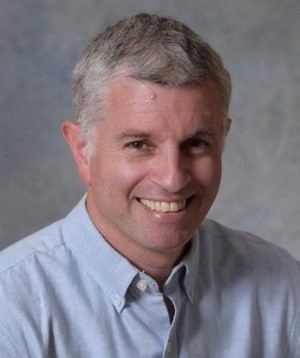
Prof. Leonid Dubrovinsky
University of Bayreuth, Germany
Title: Novel physics, chemistry, and materials at very tight place
Professional background

2009 - present Professor, Bayreuth University
2010 - present Akademischer Director, Bayreuth University
2003 Habilitation in mineralogy and geochemistry, University of Bayreuth, Germany
2001 - 2010 Akademischer Oberrat, Bayreuth University
1998-2001 Docentsip in mineralogy, petrology and tectonics, Uppsala University, Sweden
1996-2001 Distinguished Researcher of the Swedish Research Council, Uppsala University
1994 - 1996 Visiting scientist, Senior Researcher, Associate Professor, Institute of Earth Sciences, Uppsala University, Sweden
1983 - 1996 Research Associate, Junior Researcher, Researcher, Senior Researcher, Institute of Geology of Ore Deposits, Petrology, Mineralogy and Geochemistry, Academy of Sciences of Russia

Education

1986 Ph.D. in Mineralogy and Crystallography, Moscow State Univ.
1983 Geology Department of M.V. Lomonosov Moscow State University, diploma (with distinction) in geochemistry

Awards and other responsibilities

2017 Gregori Aminoff Prize in Crystallography of the Royal Swedish Academy of Sciences
2014 Doctor honoris causa (Dr.h.c.) Linköping University, Linköping, Sweden
2013, 2012 Visiting Professor ("Postes Rouges"), CNRS, Toulouse, France since 2012 Member of beam-time Review Panel at the ESRF
since 2011 Member of Scientific Steering Committee for the Physics and Chemistry of Carbon (PCC) Directorate of the Deep Carbon Observatory (DCO)
2009 Visiting Professor at Kumamoto University, Japan
2008-2011 Member of European High Pressure Research Group (EHPRG) Committee
since 2006 Co-chair and chair of SIG “Crystallography at extreme conditions” of European Crystallography Union
2005 Organizer of the ESF Exploratory Workshop on Novel Superhard Materials
2000 European Mineralogical Union Research Excellence Award, Medal
1998 Award of the Royal Society of Sciences - Bergstedt prize, Sweden

Editor

2006 - present Editorial board, High Pressure Research
Prof. Wei Chen
Xian Jiaotong-Liverpool University, China
Title: The Invention of Copper Cysteamine Illuminating Many Areas
Dr. Wei Chen is the dean for the School of CHIPS at the Xi’an Jiaotong-Liverpool University. He held the esteemed position of University Distinguished Professor within the Physics department at the University of Texas Arlington (UTA), Texas, USA. With a prolific academic career, he has authored over 360 publications in renowned scholarly journals, overseeing the compilation of two books, one monograph spanning three volumes, and contributing to the creation of 15 monographs. His works have garnered significant attention, amassing more than 20,478 citations, resulting in an impressive H-index of 73. Notably, Dr. Chen has authored a paper with 777 citations and four others with over 698 citations each. His inventive contributions extend to over 22 granted US patents. Dr. Chen's groundbreaking scientific endeavors have gained widespread recognition, notably drawing attention from CBS in the USA. In acknowledgment of his outstanding contributions, he received the University Distinguished Record of Research and Creative Activity Award in 2020. His eminence within the field was further solidified by his election as a Fellow of the International Association of Advanced Materials and a Fellow of the Royal Society of Chemistry (UK) in 2021. In 2022, he received the IMMA Scientist Award for his exceptional contributions to Nanotechnology. His remarkable achievements were acknowledged by his election as a Fellow for the US National Academy of Inventors in 2022 and as a member of the University Academy of Distinguished Scholars in 2023, the highest honor and recognition at UTA. Dr. Chen also served as the Director of the Center for Security Advances Via Applied Nanotechnology (SAVANT) from 2012 to 2018, showcasing his leadership and vision in the field. He used to be the deputy director for the laboratory of Semiconductor Materials at the Institute of Semiconductors, CAS and he received the outstanding young scientist award from CAS.
Dr. Haidong Liang
National University of Singapore (NUS), Singapore
Title: Quantum Emitters in 2D Materials
Dr. Haidong Liang is a Senior Research Fellow at Centre for Ion Beam Applications (CIBA) in National University of Singapore (NUS). His expertise lies in ion beam applications, material modification, and the development of quantum emitters in materials such as hexagonal boron nitride (hBN), diamond and SiC. Dr. Liang received his Ph.D. in Physics from the National University of Singapore in 2013. He earned his Bachelor of Science degree in Physics from Nanjing University, China, in 2009. His early research focused on micro- and nanofabrication of silicon using ion beams, with applications in photonic devices. In recent years, he has expanded the research scope of his laboratory in the field of ion beam applications, opening new directions for frontier research and technology development using accelerators—particularly in quantum light sources, quantum sensing, and optoelectronic functional materials. He has published over 20 papers in Science Advances, Physical Review Letters, Nature Communications and ACS Nano etc..
Prof. Jannick D. Rumeau
University of Lyon, France
Title: Eco-Design of polyester for recycling and Valorization of textile Waste
Prof. Jannick Duchet-Rumeau got a PhD diploma of University of Lyon in Macromolecular Materials & Composites in 1996 focused on modelling of the interface in a polyethylene / glass system tuned by the grafting connecting chains to improve the adhesion properties. She has had a post PhD position in Louvain La Neuve (Belgium) where she worked on processing and characterization of polymer nanotubes. In 1998, she got an assistant professor position then a full professor position in 2010 in the laboratory ‘Ingénierie des Matériaux Polymères’ UMR CNRS #5223. She manages the National CNRS Network (GDR #3585) dedicated to Ionic Liquids and Polymers gathering 40 academic laboratories. Her research activities are dedicated to multiscale relationships between architecture and physical properties of polymer materials involving i/ nanocomposites materials ii/ mesoporous materials iii/ self assembled materials onto inorganic surfaces iv/ ionic materials from Ionic Liquids and v/ the multi-phased materials : polymer blends and fiber based composites. She is author of two hundred papers in international journals, 7 book chapters and 200 communications in international conferences. She has supervised 60 phd students. Since 2021, she has being managed the IMP Lab gathering 200 permanent and non permanent staff.
Prof. Liaoyong Wen
China
Title: Aluminum 3D Lithography: Enabling Multiscale Metamaterials for Advanced Sensing
Dr. Liaoyong Wen has been an assistant professor at Westlake University since 2019. He received a bachelor's degree from Zhengzhou University in 2006. From 2011 to 2016, he studied at the University of Münster and the Technical University of Ilmenau in Germany, earning a doctoral degree. In 2017, he started his post-doctoral research at the Institute of Materials Science, University of Connecticut. He is currently interested in using intelligent fabrication technologies to design and produce highly precise multiscale 3D metamaterials, exploring their structure-performance relationships in optoelectronic devices and biosensors, and integrating them into novel multifunctional and high-performance devices. So far, he has published more than 50 SCI-indexed papers in journals such as Nature Materials, Nature Nanotechnology, Nature Communications, Advanced Materials, ACS Nano, Advanced Science, IEDM, and others, with an H-index of 34.
Prof. Christian K. Müller
University of Applied Sciences Zwickau, Germany
Title: Recent advances in resistive switching – prussian blue analog materials, mechanisms and devices
C. K. Müller reveived his diploma in Physical Chemsitry from Technical University of Chemnitz and his PhD in Physics from Technical University of Dresden. This was followed by several stays as a Post-Doc in Germany and Brazil. Then he continued as Research Group Leader in the field of micro and nanosensors. In 2018 after his Habilitation in the field of functional materials he became Associate Professor at Federal University of Florianopolis. Since 2019 he is Professor for Experimental Physics. The focus of his research activities are nanomaterials, sensor materials and material analysis with many published results.
Dr. Cristina IOJOIU
LEPMI Laboratory - Grenoble INP, France
Title: New polymer electrolytes with excellent properties in electrochemical devises
Dr. Cristina Iojoiu graduated with a PhD in Materials from the University of Montpellier, France, and joined the CNRS in 2006 as a researcher at the Laboratory of Electrochemistry and Physical-Chemistry of Materials and Interfaces (LEPMI) in Grenoble. Her research area, initially focused on polymers for proton exchange membrane fuel cells, has expanded to include polymer electrolytes and membranes for various electrochemical systems such as lithium, post-lithium, and redox flow batteries, as well as alkaline fuel cells and electrolyzers. She has supervised more than 25 PhD students, authored and co-authored over 120 publications in peer-reviewed scientific journals, and filed 17 patents. She has led or co-led more than 20 national, international, and European projects, and has designed and characterized various types of polymer materials for electrochemical systems. Dr. Iojoiu heads the "Materials Interfaces and Electrochemistry" team at LEPMI. Furthermore, she is the vice-director of the PEM (Physics, Engineering, and Materials) division and leads the scientific project "Multifunctional Materials for Electrochemical Generators" at the Laboratory of Excellence CEMAM.
Prof. Uwe Glatzel
University of Bayreuth, Germany
Title: Knowledge Increase of 20 Years Research on High Entropy Alloys
Birthday and place

Dec 1960 in Heidenheim, Baden-Württemberg

Studies
Oct 1981 – Jun 1987: University of Tübingen, Subject: Physics Diploma

Studying abroad
Sep 1984 – Jul 1985: Oregon State University, Corvallis, USA

Promotion
Nov 1987 – Dec 1990: Assistant at the Institute of Metals Research at the Technical University of Berlin under Prof. Dr. M. Feller-Kniepmeier. Graduation: Dec 1990

Post-Doctoral Student
Jun 1991 – May 1992: Feodor-Lynen Fellow of the Alexander von Humboldt Foundation under Prof. Dr. WD Nix, Dep. of Materials Science and Engineering at Stanford University, California, USA

Habilitation
Jun 1994: Completion of the procedure, subject: "Metal physics and microstructure analysis". Oct 1994: Appointed as private lecturer at the TU Berlin.

Prices
Feb 1995: Gerhard Hess Prize of the DFG for young scientists (approx. €400,000 spread over 4 years for material and personnel resources)
Apr 2018: Lee-Hsun-Lecture Award, Institute for Metals Research (IMR), Academy of Science, China

Professor
Oct 1996 – Mar 2003: Professor of Metallic Materials, Friedrich Schiller University Jen
Since April 2003: Chair of Metallic Materials, University of Bayreuth

Spokesperson / Managing Director
Since 2006: Managing Director of the Bayreuth Materials Center (BayMAT)
2006 - 2016: Spokesperson of the DFG Research Training Group 1229 "Stable and metastable multiphase systems at high application temperatures" for the Bayreuth site
Since 2007: Partner at "Neue Materialien Bayreuth" (NMB)
2013 – 2017: Dean of the Faculty of Engineering
Since 2017: Spokesperson of the DFG Priority Programme 2006 "Compositionally Complex Alloys – High Entropy Alloys (CCA – HEA)"
Since 2017: Head of the Metals Division at "Neue Materialien Bayreuth" (NMB)

Vocational training
Since 2011, the State Vocational School I Bayreuth has been the university school of the Chair of Metallic Materials

Hobbies
Swimming, running
Dr. Didier Devaux
LEPMI Laboratory - Grenoble INP, France
Title: Some Challenges to Develop a Next-Generation Li Metal Solid-State Batteries
Since 2016, Didier Devaux is a CNRS research scientist at LEPMI lab. on electrochemical energy storage devices. He graduated in 2012 with a PhD in materials science on electrochemical and physicochemical characterizations of polymer electrolytes for Li metal battery. He co-authored 30 peer-review publications in international journals, one book chapter, and 3 patents. He focuses on analyzing electrochemical energy storage devices' functioning and failure modes by coupling techniques, notably using X-ray and Neutron techniques with electrochemistry and impedance. The objective being to tackle the phenomena at stake at the different scales.
Prof. Christophe COUPEAU
University of Poitiers, France
Title: Buckling Structure, a Relevant Signature of the Mechanical Properties of Film/Substrate Systems
Susana Cardoso de Freitas received the Ph.D. degree in Physics by the Instituto Superior Técnico, Universidade de Lisboa and INESC–MN in 2002. In 2002 she was a Co-Op Pre-Professional Engineer at the IBM T. J. Watson Research Center (USA), and then became a researcher at INESC-MN, where she is currently the leader of the Spintronics and Magnetic Biosensors Group and manages several technology-transfer contracts with industry worldwide related to sensors, leading a team of 16 contracted engineers/researchers and 20 students. In 2018 she was selected as one of the 100 Portuguese “Women in Science”. As a Full Professor in the Physics Department at Instituto Superior Tecnico, Lisboa, she is responsible for student coordination and advanced training in microfabrication and spintronics. She is a co-author of more than 320 articles, 25 book chapters and five patents. She is an Associate Member Delegate to the European Physics Society (EPS) Council since 2019. She was a IEEE Distinguished Lecturer in 2023.
Prof. Susana Cardoso de Freitas
INESC-Microsistemas e Nanotecnologias and Instituto Superior Técnico, ULisboa, Portugal
Title: From thin films and interface interactions to a industry-relevant magnetic sensor
Susana Cardoso de Freitas received the Ph.D. degree in Physics by the Instituto Superior Técnico, Universidade de Lisboa and INESC–MN in 2002. In 2002 she was a Co-Op Pre-Professional Engineer at the IBM T. J. Watson Research Center (USA), and then became a researcher at INESC-MN, where she is currently the leader of the Spintronics and Magnetic Biosensors Group and manages several technology-transfer contracts with industry worldwide related to sensors, leading a team of 16 contracted engineers/researchers and 20 students. In 2018 she was selected as one of the 100 Portuguese “Women in Science”. As a Full Professor in the Physics Department at Instituto Superior Tecnico, Lisboa, she is responsible for student coordination and advanced training in microfabrication and spintronics. She is a co-author of more than 320 articles, 25 book chapters and five patents. She is an Associate Member Delegate to the European Physics Society (EPS) Council since 2019. She was a IEEE Distinguished Lecturer in 2023.
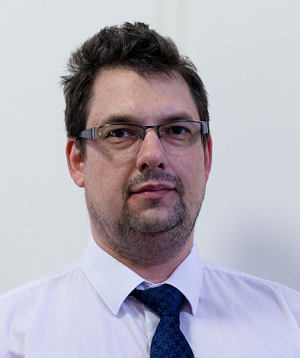
Prof. Chulsung Bae
Rensselaer Polytechnic Institute, NY, USA
Title: Molecular Engineering of Ion-Conducting Polymers for Clean Energy Technologies
 
Chulsung Bae is Ford Foundation Professor at Department of Chemistry & Chemical Biology, Rensselaer Polytechnic Institute. Broadly speaking, Bae's research group focuses on development of functional polymeric materials that can find applications in the areas of clean energy technologies, using synthetic organic chemistry as a tool. Specific examples of projects include novel ion conducting polymers that can be used as a key component in next generation energy conversion and storage technologies, such as fuel cells, water electrolyzers, and redox flow battery, and functional polymer membranes that can play a crucial role in energy efficient separation process. He received BS in Polymer Science & Engineering at Inha University, MS in Materials Science at POSTECH, MS in Chemistry at University of Massachusetts at Lowell, and Ph.D. in Chemistry at University of Southern California under the guidance of Surya Prakash and Nobel Laureate George A. Olah. He conducted postdoctoral research with John F. Hartwig at Yale University before starting independent academic career in 2004. In 2012 Bae relocated his research group to Rensselaer Polytechnic Institute.
Dr. Steven Le Vot
University of Montpellier, France
Title: Stability by Design: Developing Next-Generation Nitroxide Posolytes for Redox Flow Batteries
Dr. Steven Le Vot is an electrochemist specializing in the design and characterization of advanced materials for electrochemical energy storage systems. He obtained his Ph.D. in Energy and Materials Science from the Institut National de la Recherche Scientifique (INRS, Canada) in 2012, focusing on the electrochemical oxidation of ammonia for hydrogen production and environmental remediation. After postdoctoral research at Sorbonne University (anodes for Li-ion batteries) and at the French Alternative Energies and Atomic Energy Commission (CEA) (ORR for fuel cells), he joined the University of Montpellier in 2016 as Associate Professor within the Charles Gerhardt Institute of Montpellier (ICGM).

His research activities deal with the synthesis of nanostructured materials, electrochemical studies of complex interfaces, and the tuning of surface properties via functionalization. He has developed expertise in electrochemical energy storage devices, including batteries and supercapacitors, working on both advanced electrolytes and complex electrode materials such as porous carbons and 2D materials. Currently, his work focuses on innovative redox flow batteries (RFBs), particularly on developing stable electrolytes for aqueous organic systems, studying electron transfer on modified graphite felts, and exploring redox-targeting RFB concepts.

• 2024: HDR (Habilitation à diriger des recherches), Université de Montpellier, France
• 2016: Associate professor at Université de Montpellier, France
• 2014-2016: Post-Doc, LICSEN Lab, CEA Saclay, France (ORR for Fuel cells)
• 2013: Post-Doc, PHENIX Lab, UPMC, Paris, France: (Tin anodes for Li-ion batteries)
• 2008-2012: PhD in Energy and Materials Sciences, UQAM & INRS, Montréal, Canada (Electrolysis of ammonia and Pt-based alloy electrodeposition)
Dr. Hongyuan Chuai
Title: The discovery of carbon reduction reaction
Dr. Hongyuan Chuai received her PhD degree from Nankai University in 2019. During her PhD study, she worked as a joint PhD student in Centre de Recherche Paul Pascal, Centre National de la Recherche Scientifique (CRPP, CNRS) from October 2016 to October 2018. Then she worked as a postdoctoral researcher at Tianjin University and now she is working as a research fellow at Hong Kong Polytechnic University. She discovered and proposed the carbon reduction reaction for the first time in the world, pioneering a new direction for the electroreforming of carbon materials into high-carbon chemicals. She has published over ten papers as the first/corresponding author in renowned journals such as ACS Catalysis, and has been granted/applied for two patents. She has been awarded to Best Researcher Award for the contribution and honourable achievement in innovation research.
Prof. Wenwen Fang
Technische Universität München, Germany
Title: Bio-based high performance fibers
Prof. Fang completed her undergraduate studies in China in 2010 and then moved to Finland to pursue a Master's degree in chemical engineering at Åbo Akademi. From 2014 to 2018, she conducted her doctoral studies in Material Science at Aalto University, Finland.

After completing her Ph.D., Prof. Fang spent a postdoctoral period at Freiburg University in Germany, working on polymer-DNA gels. In 2020, she returned to Aalto University, where she was involved in the Ioncell® fiber spinning project, focusing on transitioning the technology from lab scale to pilot scale. In 2022, Wenwen Fang was appointed as a staff scientist on rheology at Aalto University.

In September 2024, Prof. Fang began her professorship in Particle and Fiber Technology for Bio-Based Materials (PFT) at TUM and she also received the ERC StG in 2024. Her research centers on the extraction and isolation of bio-based polymers, such as cellulose and proteins, from renewable feedstocks and waste streams, with the aim of developing sustainable processes for converting these materials into high-performance fibers and functional materials.